Friday, July 6, 2012

Where was your Victorian letter posted?

During Victorian times (and for a few years afterwards) postal stamps were sometimes franked with an oval which contained a number - representing the post town. In this case this imperforate penny brown has been franked with stamp 810 (upside down) indicating that the letter was posted in Tring. 

To help you identify such numeric franks I have listed all the numbers associated with Hertfordshire towns, with a link to a site covering the whole of England.

Towns with numbers are: Abbots Langley, Baldock, Barnet, Berkhamsted, Bishops Stortford, Boxmoor, Broxbourne, Buntingford, Elstree, Hatch End, Hatfield,  Hemel Hempstead, Hertford, Hitchin, Hoddesdon, Kings Langley, Letchworth, Markyate, New Barnet, Rickmansworth, Royston, St Albans, Sawbridgeworth, Stevenage, Stanmore, Tring, Waltham Cross, Ware, Watford, Welwyn.

Thursday, July 5, 2012

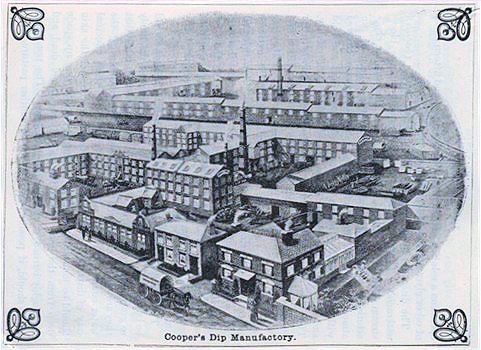
Coopers of Berkhamsted - Links with South Africa

I was very excited when I got Terence's query about his Timson ancestors from Berkhamsted. My first ever job was with Coopers in 1962 and I was an information scientist whose job involved handling research and development reports from the South African subsidiary. So not only have I been able to help Terence with his query about Timson, Berkhamsted & South Africa, 1850-1930 but I have learnt something about the origins of my first job!

Cooper's main product was sheep dip - and the company was successful because it was actively promoting its products world wide. An earlier query by Larry had told us something about the early commercial links with America. The current query throws light on how Samuel Rowland Timson came to play an important role in the Cooper story (were the Berkhamsted Freemasons part of the picture?) and something about how the links with South Africa were made.

While much of the information could be gleaned from census and trade directory data, there was also interesting information on visits by members of the Timson family, almost certainly on Cooper business, to Buenos Aires, Cape Town, New York, East London and Sydney.

Tuesday, July 3, 2012

Another Vulcan Card - this one from Hunsdon

Hunsdon Mill House, circa 1920
Another Vulcan post card "published" by a village store. This one shows Hunsdon Mill House, and gives the name of the local store run by Cornelius James Lilley. who died in 1933

Monday, July 2, 2012

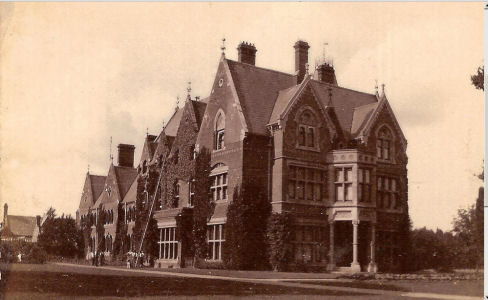
A house for a "Gentleman of Fortune" near St Albans

During the reign of Queen Victoria there were a lot of upwardly mobile business people who wanted somewhere pleasant to live in the country, not too far from a railway station, and with a reasonable amount of ground and accommodation for a bevy of resident servants. I decided to do a case study on one such house near St Albans.

Hawkswick was a large house, just off the St Albans to Harpenden Road, which was an ideal residence for someone who had made money during the boom years towards the end of Queen Victoria's reign. It was built in about 1870 by George Whittingstall, a prosperous Watford brewer. He was followed by George Checkland, who was an iron master and colliery owner and John Sherriff Smith who was a merchant and ship owner. Next the Dowger Countess of Limerick moved in after the death of her husband, but soon moved out after she remarried.  She was succeeded by Walter Reynolds, who was a provision merchant from London. In each case it would seem they had about half a dozen residential staff - in addition to any gardeners, etc., living elsewhere.

Sunday, July 1, 2012

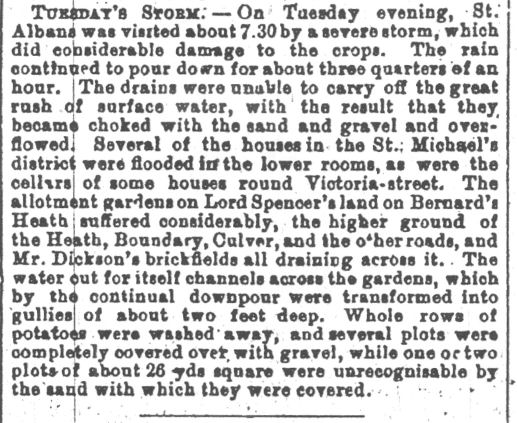
Heavy Rain and Floods hit St Albans

 From the Herts Advertiser of July 27, 1889

June statistics and some late news

STATISTICS:  While the number of page views to the newsletter is down by nearly 300 compared with a total of 4,399 in May, I had been less active and the number of posting had dropped from 38  to 30 (several of which were "off topic") so there was less new to be seen. Half way through the year the number of visitors in six months to the main site was 133,026 which means that we are on target for over a quarter of a million visitors in 2012. Donations are a little slow at £460 (full year target £1200) but are up on this time last year.

The main reason for the lower number of post is that I have been spending more time doing other things - including watching tennis - and while most of these extra activities take me away from the computer keyboard I have also been spending more time on my other blog - Trapped by the Box - where several recent postings relate to studies on the evolution of human intelligence!

Hertfordshire Countryside Index: Jon tells me that the July update to the St Albans "Arc & Arc" index will cover the first thirty years of Hertfordshire Countryside - which will be a useful additional tool - especially as I have personal copies for this period but cannot locate interesting articles because currently I don't have an index.

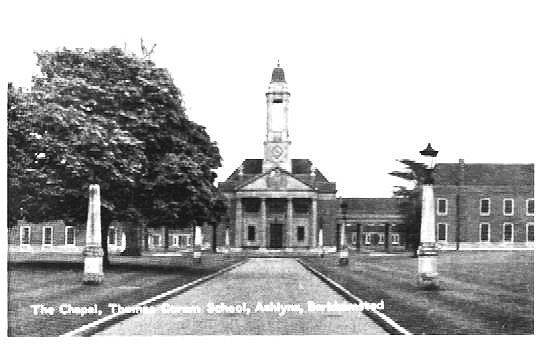
The Foundling School moved to Berkhamsted in the 1930s and closed in 1954 but if you are interested in its earlier history why not start by visiting the Foundling Museum web site - or even visit the museum next time you are in London.

National Archives: The costs of their services are increasing on July 29 so get your orders in quickly.

Digging up the Dead: While it does not refer to Hertfordshire graveyards the recent BBC article on the subject reminds us that town centre redevelopments can often unearth human bones - in some cases involving graves from as recently as Victorian times.

Queries from Ancestry: Over the years I have posted messages on the Rootsweb notice boards, which are now run by Ancestry. This means that I am a registered user of Ancestry, and my profile make it clear that if you want me to answer a question you should ask me using Ask Chris on this site. Occasionally I get direct emails requesting help from Ancestry users who have ignored the instructions to visit this site given on my profile. My policy in future will be that they will not get a reply from me (which would be jumping the queue over properly addressed queries) on the basis that if they were too lazy to read the instructions they cannot complain if I am too "lazy" to reply. On the other hand, if they have seen this site and don't want to give a donation to charity they can't complain if I decide not to donate my time to help such miserable misers. 

Saturday, June 30, 2012

Radwell Mill, near Baldock

I have just posted a further post card (with larger image available) of Radwell Mill, near Baldock, on the Radwell page. The card was posted in 1905 and may predate the decision to create Letchworth Garden City.

Gaddesden Place before the Fire

In 1905 there was a very big fire at Gaddesden Place, Great Gaddesden, and various pictures of the fire and the ruins are relatively common, and I have posted a number in the past. I have now added to the Great Gaddesden page a further picture (with larger image) showing the house before the fire. It is a post card published by Waite, of the Post Office, Water End, Great Gaddesden.

Thursday, June 28, 2012

I don't always get things right!

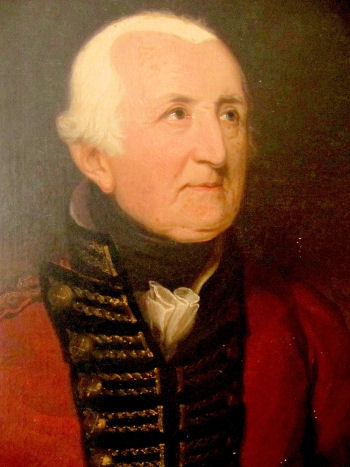
Almost a year ago Steve asked me about a painting of General Cornelius CUYLER, Danesbury, Welwyn, 1799-1819 and in the subsequent discussion I speculated on the reason that one of his daughters, Harriet Fanny Cuyler was buried in the tomb of the rector of Welwyn ...

Now Leslie has sent me some very interesting extra information about Harriet, which shows that she was became head nurse for Lord Melbourne at nearby Brocket Hall so I decided to look into the history a bit further and found that there was a perfectly ordinary explanation for Harriet being buried with Samuel Jahnes Knight. She was buried with her sister - who was Samuel's wife!

Tuesday, June 26, 2012

The First Tring Steeple Chase in 1844

The coming of the railway to Tring in 1837 made it possible for people of a sporting inclination to travel from London for the day. In 1844 this led to the first Tring steeple chase to be held and a very lengthy report appeared in the Sunday Times. This includes a detailed description of the difficult cross country course, the horses involved and how they tackled the main obstacles, followed by the result.